What is Rainwater Harvesting?
Rainwater harvesting is the collection and storage of rain from rooftops or other surfaces for later use. In Texas, it can reduce strain on municipal systems, improve drought resilience, and provide a high-quality water source for landscapes and other non‑potable uses. With appropriate treatment and code compliance, systems can also be designed for whole‑home potable supply in many jurisdictions.
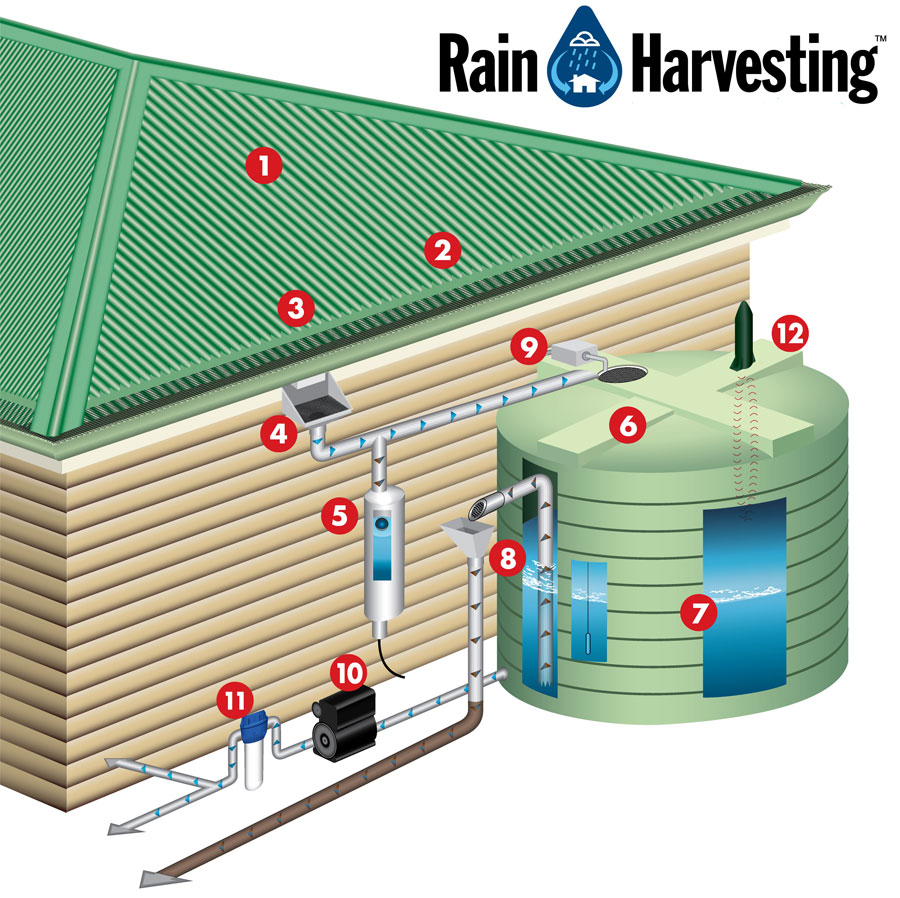
Main components of a rainwater system
A rainwater harvesting system is a simple chain: capture rain, move it to storage, then deliver it safely where you need it. Below are the common components and what each one does.
- Catchment surface
- The surface used to collect rain—most often the roof of a building (or multiple buildings).
- Gutters and downspouts
- Channel rainwater from the catchment surface to the storage tank. They should be sized to match potential rainfall volumes and flow velocity.
- Debris filters
- Catch and remove larger debris (like plant and animal matter) to keep it out of the tank and prevent clogs in plumbing.
- First-flush diverter
- Diverts and discards the initial runoff that may contain roof-bound contaminants so it doesn’t reach the storage tank. It may or may not be needed depending on the use case, but it’s often recommended.
- Storage tank
- The central part of the system—this is where harvested rain is stored. Tank capacity should be based on water-use needs and catchment potential. Tanks come in polyethylene, fiberglass, stainless steel, or galvanized steel, with typical capacities ranging from about 90 gallons to 100,000 gallons.
- Delivery system
- The pumps, pipes, and valves that deliver stored rainwater to where it’s needed.
- Post-tank filtration and treatment
- For larger-scale uses, additional filtration and treatment is often required by standards/regulations and is recommended for health and safety. Common approaches include multi-stage cartridge filtration down to 5 microns (or less), plus purification via ultraviolet (UV) treatment, chlorination, or reverse osmosis.
Systems, Accessories, and Tank Suppliers
Examples of common rainwater harvesting system components and tanks.
First Flush Diverter
Debris Screen
Leaf Screen
Gabbay Residence Rainwater System
Credit: TWDB Raincatchers Award 2024
Post-Oak Savannah GCD Rainwater System
Credit: TWDB Raincatchers Award 2024
Prairielands GCD Rainwater System
Credit: TWDB Raincatchers Award 2022
USA Made Bushman Tanks
Texas Metal Tank
Texas Water Tank